RURAL HEALTH INITIATIVE QUATERLY REPORT (JAN-MARCH).
AREA OF OPERATION
Rural health initiative (RHI) is rendering services in two main Districts - Jinja and Kamuli in Kisozi sub-county.
However, people from various districts are served as well, although only the two are in the organizations catchment area.
The following were some of the major objectives during the quarter:
- Provide counselling to 1500 clients
- Provide HIV testing services to 1500 people.
- Maintain 30 bicycles to community resource persons (CORPs).
- Provide 150 home based care kits.
- Carry out 1300 Home visits by religious leaders and (CORPs).
- Provide treatment for opportunistic infections to our registered clients.
- Refer clients to other centres and hospitals for further management.
ACTIVITIES EXECUTED
HIV COUNSELING AND TESTING
A total of 1,829 Individual clients were counselled and tested in both Jinja and Kamuli Districts. This included both HCT and RCT methods.
Clients were mainly mobilised by trained counselling aides (AOET community representatives) (CORPS) and religious leaders. These two categories of people were trained to do this work and are always facilitated with lunch allowance and bicycles are provided to them to use.
This is AOET’s biggest Vehicle of HIV Counselling as they live in the different communities where our patients are.
During this time, Counselling was done by professional counselors but due to the limited number of staff, individual counselling was not done as frequently as should have. Group counselling was however provided on a regular.
The epidemiology of HIV among only those who visited our centres is shown below according to sex, age and marital status.
TABLE 1 SHOWING NUMBER OF CIENTS TESTED ACCORDING TO THEIR SEX
NUMBER TESTED
HIV POSITIVE MALES TESTED HIV POSITIVE FEMALES TESTED HIV POSITIVE
MARRIED
913
26
315
13
598
13
WIDOWS 223 16 25 4 198 12
DIVORCED 147 13 58 2 89 11
SINGLES 528 12 247 3 281 9
SEPARATED 33 3 15 2 18 1
TOTAL 70 660 24 1,184 46
TABLE II SHOWING PEOPLE TESTED BY AGE GROUP.
0-5YRS 221 2 106 2 115 0
6-10YRS 152 3 76 1 76 2
11- 15YRS 97 2 40 0 57 2
16- 20YRS 110 2 33 0 77 2
21-25YRS 161 9 52 3 109 6
26-30YRS 190 11 48 2 142 9
31-35YRS 155 9 43 3 112 6
36-40YRS 197 11 53 4 144 7
41-45YRS 119 9 39 3 80 6
46-50YRS 117 9 29 2 88 7
51YRS + 310 4 136 4 174 0
TOTAL 1,829 71 655 24 1,174 47
Treatment of opportunistic infections
A total number of 390 cases were seen during the quarter and these were of various sicknesses
(Diagnosis).
This was done both at the AOET Main clinic and the mobile clinics. Both our fulltime clinical officer and the doctor who comes once a week and on appointment did the consultation.
In addition to treatment of malaria, a prevention outreach was also done through the provision of Insect Treated Nets (ITNs) which were given to 300 clients both adults and children. Also 259 mosquito nets were re-treated and these included those for the clients who had received them eight months ago and the community around the AOET Main clinic.
The clients’ registration greatly increased during the quarter mainly due to the funding from USAID/ IRCU / PEPFA, which enabled the department to have adequate testing kits and drugs.
Other Drugs came from visiting Teams, Willamette Christian center and Grace Community Church.
CLINICAL ASSESSMENT
A total of 4,063 cases were seen during the quarter and these included our sponsored children, their parents/guardians plus the general community. AOET Rural Health Initiative (RHI) department since the last two years decided to open up the clinic to the general public instead of treating only the HIV/AIDS infected persons.
The department thought that this would in one way or the other fight stigma where the clients could freely come to the clinic since everyone would be coming. However most of the clinical assessments were done in Kamuli and this outlet centre had high numbers because the area does not have any other health facilities.
As a result, when we take a mobile clinic there, almost every one that has been waiting comes, and that is in hundreds (for a single days’ work)!!
TABLE III SHOWING DISEASES PATTERN FROM JANUARY -MARCH 2008
HIV POSITIVE CLIENTS SPONSORED CHILDREN ORDINARY PATIENTS TOTAL
FEMALE
398
38
1,062
1,498
MALE
158 35 435 628
CLINICAL MALARIA 51 25 371 447
SKIN INFECTIONS
143
16
174
333
OTHERS 359 16 585 960
GASTRO-INTESTINAL INFECTIONS 223 12 931 328
RESPIRATORY TRACT INFECTIONS 114 33 508 655
SEXUALLY TRANSMITTED DISEASES
33
0
58
91
EYE INFECTIONS 11 4 24 39
EAR INFECTIONS 1 0 8 9
TB DIAGNOSIS
TB management was not done at the mobile clinic but diagnosis was done and only at the main clinic because it was not possible to be carried out in the village (0n mobile clinics) since they did not have electricity to operate the gargets used.
Almost all the HIV clients were screened especially those in HIV clinical staging 3 and 4 and those with TB clear clinical picture. Normally, we refer clients who have tested TB positive for TB treatment in hospitals and other TB centres.
The cotrimoxazole and multivitamins prophylaxis programme
This programme was intended as a way of protecting our patients from opportunistic infections that weaken them. A total of 390 clients were put on both multivitamin and cotrimoxazole. For the patients that are allergic to sulpha drugs, dapson is always prescribed as an alternative.
The following criteria during these three months was used in running of this programme;
1) The patient must accept to be tested and registered at any of the AOET- Uganda service centres (for easy follow up).
2) The Patient should be willing to be treated using septrin and multivitamin prophylaxis.
3) Patients that do not have a history to reaction on using Sulpha as dapson is very rare.
Laboratory services
A total number of 2164 tests were done during the quarter and this happened because of the good machines that were provided by the project USAID/IRCU.
Tests done at the AOET (RHI) clinic lab
At AOET, a typical investigation in addition to HIV includes Malaria, Parasite slides, stool examinations, Sputum for TB, VDRL, Urinalysis and Haematology and widal tests for typhoid infections.
However, the clinic was able to take care of such a big number of people because of the sufficient supply of the reagents and all the consumables that were needed.
STI Management
The popular sexually transmitted infections in this quarter included;
1) Candidiasis
2) Genital ulcers
3) Genital watts
4) Urinary truct infections.
Most of the cases were managed by the medical staff although a small number was referred to other health units with more facilities.
Quality Control.
During the quarter, the department head together with the lab technician found out that in order to provide quality services, there was need to take samples to other recognised centres for quality control. In March, Joint Clinical Research Center (JCRC) Kakira branch, was approached and AOET RHI clinic was allowed to be taking the samples for further testing and confirmatory.
Referrals to hospital and other organisations.
Clients were referred to hospitals plus other health care centres and service organisations.
This was especially for further specialised treatment and tests, which are not provided by the AOET RHI clinic.
Also referrals were done so that other clients can access care and treatment services within their neighbourhood. The other reason for referrals during the quarter was to maintain the collaborative strategy with other service organisations and health centres. However, there was a challenge in managing clients who fail to go for tests required like TB and CD4 count. During this quarter, it has been hard to continue monitoring them without such results.
Networks
ALL our patients have formed networks out of the past test groups with four of these in Jinja and their major role is to have patients support each other socially. Several activities like crafts making, music and dance, drama were done. Two drama groups performed six HIV sensitisation shows both in Kamuli and Jinja Districts. The drama shows and music are used as way of HIV prevention in the areas of operation. For purposes of sustainability, the network was advised by AOET and facilitated to register and it’s now recognised in the district as a Community Based Organisation.
Home based care
A total 180 clients were visited in the three months. Both people living with HIV/AIDS (PLWHAS), Religious leaders and AOET staff did this activity. The people that conducted these visits were trained by AOET specifically in HIV facts, counselling and general palliative care. Several activities like washing cloths, general home cleaning and psychosocial support, mobilising people and referring them for treatment were done. In enabling them to do this work, these community based workers whose major role is to visit clients have been given bicycles and are given lunch allowances by AOET. During this activity, palliative care packages like Soap, Jik, cotton wool and painkillers are provided in addition to the medical care given to some clients who need it at home especially IV lines.
However according to the reports of those visiting, clients need more than medical and psychosocial support. A big number of them need nutrition boosting which AOET is considering for the future but does not provide right now.
HIV/awareness.
Due to limited staff and funding, HIV awareness as an activity was only done in one school.
It’s indeed a necessary activity but the current funding and staffing cannot enable the department to implement this activity.
Staff Training
One of the staff - a Counsellor, was sent for further training in palliative care and ART at mildmay in Kampala for two weeks.
However, more training is required as lack of sufficient knowledge let to many patients being referred to other centers when we could have handled them ourselves.
Also, 3 trainings were carried out during the quarter for District leaders, religious leaders, People living with HIV/AIDS and CORPs.
In all these trainings, this department hires facilitators from the District health services and other service organisations.
An update on local partnerships
AOET rural health initiative is currently collaborating with TASO, JCRC - the eastern branch in Kakira, Jinja network of AIDS service organisations, Jinja main referral hospital, Jinja DHS and the Uganda AIDS control program.
Funding.
Throughout the quarter, almost all the activities were funded by USAID through inter religious council of Uganda (IRCU). Also volunteer groups especially from the US brought in some items like assorted drugs and small clinical equipment. Grace community Church and Willemette Christian center were some of the contributors to the success of this quarter!
Nevertheless, there is still a HUGE funding gap for the activities done in the department.
While hundreds of people - although sick - are sometimes able to walk to our Main Clinic or Mobile clinics in the Villages, some are not, and so AOET looks for avenues for them to be taken care of as well!
One such person “was” Jesca!!!
Jesca’s Story:
Jesca is 39 years old and lives in Kagoma sub-county with five children. Two girls and 3 boys.
Jesca is disabled due to polio and she has never walked since she was born .
She was however married to a man who later abandoned her 11 years a go. For all this time, she has been struggling to meet her needs and those of her children.
Jesca told us that her biggest wish was to move and do some sort of small scale business so she and her Children can earn a living, however this has never been possible because she couldn’t walk.
When the AOET medical team began interacting with her, they found out that the entire family had no beddings and got Malaria frequently (am sure because they had no mosquito nets) and they REALLY needed help!!!
The Medical Team came back to the AOET Offices and recommended that Jesca be attended to with immediate effect!!!
With Wheel Chairs given to AOET by OGT, Jesica was given a wheel chair that exited not only her, but the neighbours, her children….
You should have been there to see the Joy!!!
She is now able to move around the village and return visits neighbours and friends had paid her - one of her biggest wishes.
She is also able to go to the clinic when she is sick.
The entire family has been given beddings, and her Children have also been connected to the AOET Child sponsorship program where they will get sponsored (when we get sponsors for them)!!!.
Now that she can move around, Jesca is looking for funding to start a small business to support her family!!!
It is WONDERFUL when we meet cases like these that could not see beyond “today” and their lives are changed - taken to a level where they begin dreaming BIG!! Totally WONDERFUL!
VOLUNTEERS.
The department received two sets of volunteers from USA during this quarter and both groups participated in the activities that were being done at that time. One of these groups had time with the post test group and taught them how to make Jewry and provided them with relevant tools for this trade. These tools are kept by the department so that other groups too have access to them.
These volunteers also came with assorted medicines that were given to the clinic and this helped with the big gap of medicines that has been threatening the department.
CHALLENGES.
-Overwhelming number of clients at our centres
-In-adequate staffing.
-Delay of funding.
-Inadequate space especially for stabilising the weak clients.
-Inadequate knowledge on data management by the departmental members aggravated by lack of a data manager.
NEEDS:
- More skilled people on staff.
- Funding available is less, the needs are great! We need help!!
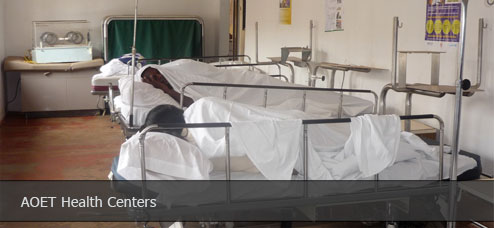
Our Clinic is too small. A proposal has been generated to Expand the existing structure / facilities, but we haven’t been able to get a partner/ donor that would help us build it!
- Capacity building in data management is urgently needed to be able to compile the lots of data collected.
-The laboratory needs at least two people.
Do you have the time and skills to come and work alongside AOET in the area of Data?
Or are you able to help us financially to hire an additional person that can handle our Data?
ACTIVITIES FOR THE NEXT QUARTER
1. HIV Counselling and testing
2. Provision o HCT, VCT and other lab investigation services
3. General palliative care.
4. Refer clients
5. Stabilization of patients
6. Medical support
7. Provision. Home Based Care
8. Review meeting with religious leaders and community resource persons.
9. Training of PHAs and religious leaders.
Compiled by.
ANNIE ALIMUWA
Manager,
AOET Rural health initiative.